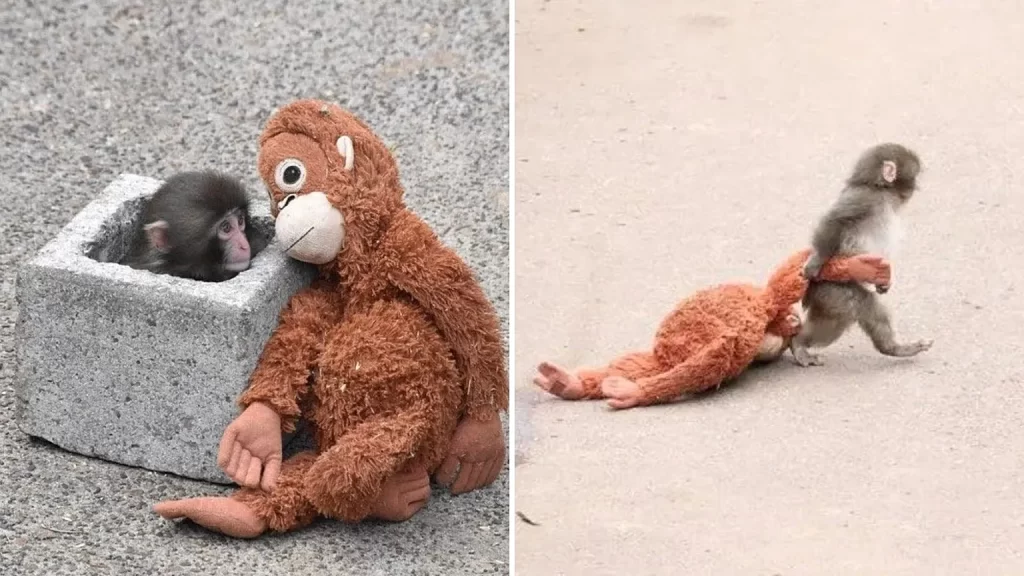
The Monkey Experiment by Harlow
Harry Harlow, a psychologist, used baby rhesus monkeys in a well-known attachment study in the 1950s. Harlow’s monkey experiment is a common name for the experiment. It altered scientists’ conceptions of comfort, love, and emotional attachment.
How Did He Act?
Harlow took infant monkeys away from their moms. After that, he put them in cages with two fake “mother” figures:
One held a feeding bottle and was constructed of wire.
The other did not supply food, but it was wrapped with a plush cloth.
Finding out which mother the infants preferred was the aim.
What Were the Results?
The baby monkeys spent most of their time clinging to the soft cloth mother. They only went to the wire mother when they were hungry. After feeding, they quickly returned to the cloth one.
When frightened, the monkeys ran to the cloth mother for comfort. This showed that contact comfort was more important than food for emotional security.
Why Do We Get Attached to Objects?
Our homes are full of things we cannot let go of. It might be a childhood teddy bear, your grandfather’s walking stick, or even a simple hair tie. These objects may look ordinary. But to us, they feel special.
Have you ever wondered why?
Why does throwing away an old concert ticket feel painful? Why is it hard to donate childhood toys? The answer lies in psychology.
The Role of Emotions and Memories
We attach meaning to objects because they hold memories. A concert ticket is not just paper. It reminds you of a night, a feeling, or a person. When we keep an object, we keep the memory attached to it.
Objects also give comfort. As children, we often hold on to soft toys or blankets. These items make us feel safe. That sense of safety can continue into adulthood.
Evolution and Survival
Humans are wired to seek security. In early history, owning tools or resources meant survival. Even today, keeping objects can create a sense of control and stability.
Modern Consumer Culture
Today, society often links identity with possessions. We express who we are through what we own. Clothes, gadgets, and keepsakes become part of our personal story.
In the end, we do not just hold on to objects. We hold on to feelings, memories, and pieces of ourselves.
Ultimately, connection to objects is about the identities, memories, and feelings we imprint on them rather than the actual objects. My notebooks are living timelines of my ideas and development, not just pages bound together. Madhurzya’s drawing tab is more than just a device; it is a vehicle for her expression and creativity. Shatakshi demonstrates how comfort may be found in the most basic ways through her attachment to even the tiniest everyday items, such as a hair tie. Furthermore, Shreya’s attachment to her clothing illustrates the profound fusion of memories and personal style. These attachments ultimately show how we externalize aspects of ourselves into the physical world, transforming everyday objects into silent reminders of who we are.

Leave a Reply